


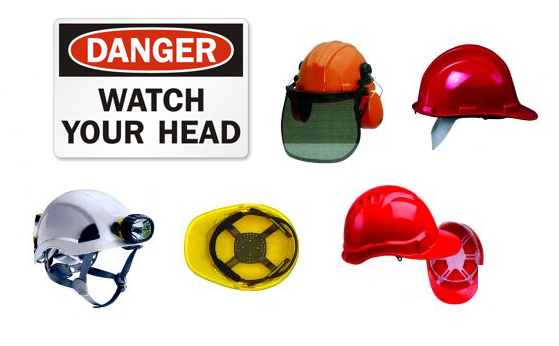
Proper headgear can protect workers from head injuries due to impact (including lateral), flying, falling or thrown objects; splashes from chemicals or harmful substances, and contact with energized objects and equipment. Workers exposed to electrical hazards shall wear non-conductive safety headgear.
Safety headgear shall be worn at all times by every worker while on a project.
All safety headgear shall meet approved CSA or ANSI standards and must be worn according to manufacturer's specifications for these standards.
 Key Safe Practices
Do
- Replace headgear that is pitted, cracked, or brittle.
- Replace headgear that has been subjected to a blow even though damage cannot be seen.
- Remove from service any headgear if its serviceability is in doubt.
- Replace headgear and components according to manufacturer's instructions.
- Consult OH&S or your supplier for information on headgear.
- Ensure that headgear is secured in place by proper retention apparatus, where required, as per Provincial OH&S Authority and/or WCB legislation and in compliance with CSA or ANSI standards.
- Drill, remove peaks, and alter the shell or suspension in any way.
- Use solvents or paints on the shell, put chin straps over the brims of Class B headgear.
- Use any liner that contains metal or conductive material.
- Carry anything in the hard hat while wearing it.